When marine propulsion systems are manufactured, precision is everything. Tolerances are measured to exact specifications, surfaces are machined to perform under immense loads, and every component must arrive ready for installation.
That level of precision creates a challenge when these assets need to be transported.
This field report looks at how Safe Seal Wrap was used to protect a high-precision marine propeller shaft during global intermodal transit and shipyard storage — ensuring critical surfaces remained in factory condition from machine shop to final installation.
The Asset: High-Value Marine Propulsion Equipment
Marine propeller shafts are essential components within commercial and industrial vessels. They transfer torque from the engine to the propeller, operating under constant load and demanding conditions.
The most critical areas are often found at the “business end” of the shaft — where precision flanges, tapers, and mounting surfaces must remain bare metal to achieve a perfect mechanical fit.
Because these surfaces are left exposed for installation accuracy, they are especially vulnerable during transport.
The Challenge: Critical Surface Vulnerability
Moving large propulsion components across multiple transport stages introduces several risks that can compromise both performance and project schedules.
Atmospheric Corrosion
Marine environments create ideal conditions for flash rusting and surface pitting. Salt air, moisture, and humidity can begin damaging exposed metal quickly if not fully sealed.
Surface Contamination
Airborne grit, dust, and industrial debris can settle onto machined surfaces, creating scratches or contamination that affects seal integrity and fitment.
Physical Damage in Transit
Crane handling, truck loading, sea freight movement, and storage transfers all create opportunities for abrasions, dings, and impact damage.
Stress Risers
Even small surface defects can become stress concentration points under the extreme torque loads of marine propulsion systems, increasing the risk of premature failure.
For high-value engineered assets, these risks are not cosmetic — they are operational
The Solution: Safe Seal Engineered Encapsulation
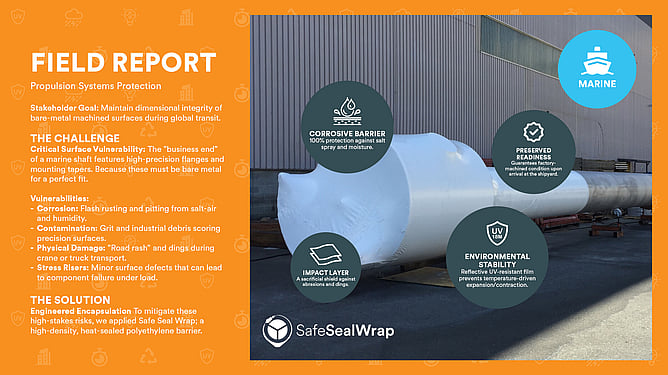
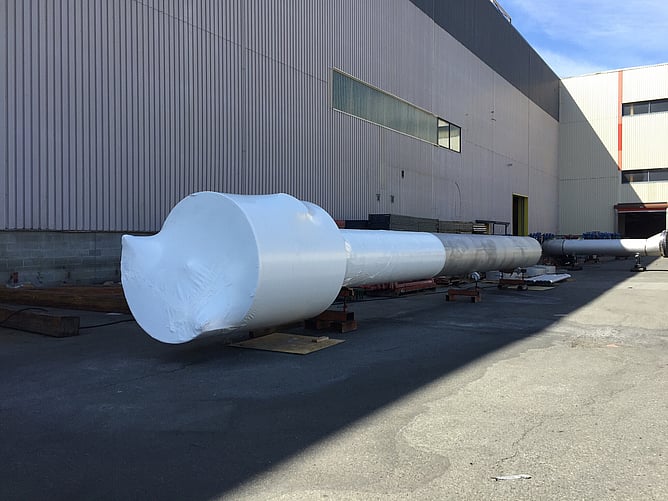
To protect the shaft throughout transit and storage, Safe Seal Wrap was applied as a high-density, heat-sealed polyethylene barrier, custom-fitted to the component.
Once shrunk and sealed, the wrap formed a drum-tight protective enclosure designed to preserve every critical surface.
Corrosive Barrier
The sealed containment system blocks salt spray, humidity, and moisture exposure, neutralising the threat of oxidation and corrosion.
Impact Layer
Safe Seal acts as a sacrificial outer shield, absorbing minor abrasions and handling contact during transport stages.
Environmental Stability
The reflective, UV-resistant material helps reduce temperature-driven expansion and contraction, supporting dimensional consistency.
Preserved Readiness
Most importantly, the shaft remains in factory-machined condition upon arrival — ready for inspection and installation without costly rework.
Stakeholder Benefit: Zero-Defect Delivery
For shipyards, fleet owners, and marine contractors, delays caused by damaged propulsion components can impact dry dock schedules, labour planning, and vessel readiness.
By protecting the shaft during every stage of the journey, Safe Seal helps eliminate:
Transit-recovery machining
Unplanned inspections
Surface remediation costs
Installation delays
Schedule disruption
The result is a component that moves from machine shop to hull without environmental degradation.
Why It Matters
Marine propulsion systems are engineered for performance under extreme conditions. Protecting them during transit should meet the same standard.
Safe Seal Wrap provides a practical, proven solution for safeguarding high-value marine assets — whether they are travelling by road, sea, or stored dockside awaiting installation.
Because when precision matters, protection matters too.
A precision fit requires a precision seal. We protect the surfaces that power the fleet.